
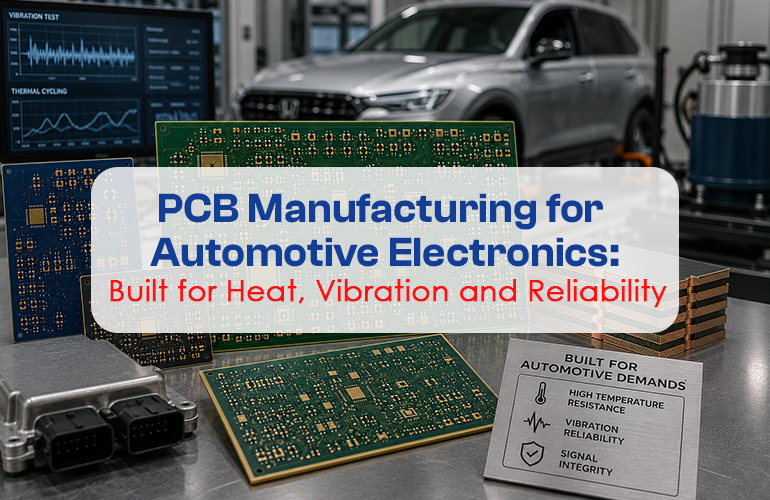
PCB manufacturing for automotive electronics requires high precision, durability, and reliability. Automotive systems operate in challenging environments where heat, vibration, electrical stress, and continuous usage can affect performance.
Modern vehicles use electronic systems for many critical functions. These include control units, lighting systems, sensors, battery management systems, safety electronics, infotainment modules, and power control circuits.
Therefore, automotive PCBs must deliver stable performance throughout their operating life. A reliable manufacturing process helps companies build boards that can handle real-world automotive conditions.
Why Automotive Electronics Need Reliable PCBs
Automotive electronics face changing temperatures, mechanical movement, and electrical loads every day. Because of these conditions, a PCB must maintain consistent performance without unexpected failures.
A poorly manufactured PCB can create signal problems, system errors, or complete product failure. Therefore, manufacturers must focus on material selection, copper design, inspection, and testing during production.
Reliable PCB manufacturing helps automotive companies reduce risks and improve product confidence.
Heat Management in Automotive PCBs
Heat management is one of the biggest challenges in automotive electronics. Vehicles generate heat from engines, power systems, and electronic components.
A PCB must transfer heat effectively to maintain stable operation. Engineers consider several factors, including:
- Material selection
- Copper thickness
- Thermal design
- Board layout
- Surface finish
Additionally, proper thermal planning helps increase PCB lifespan and prevents performance issues caused by overheating.
Vibration Resistance and Mechanical Reliability
Automotive systems experience continuous vibration and mechanical movement. Because of this, PCB structures must remain strong throughout the product lifecycle.
Manufacturers need to maintain high-quality drilling, reliable plating, and proper layer bonding. These factors help prevent issues related to:
- Weak plated through holes
- Connection failures
- Mechanical damage
As a result, strong manufacturing control improves PCB reliability in automotive applications.
Current Handling Capability
Many automotive applications require PCBs to handle higher electrical loads. Examples include battery systems, lighting controls, motor controllers, and power management circuits.
To support these applications, engineers must carefully plan:
- Copper thickness
- Track width
- Track spacing
- Heat dissipation
Moreover, proper current planning prevents overheating and improves long-term electrical performance.
Signal Reliability in Automotive Systems
Modern vehicles depend heavily on sensors, controllers, and communication systems. These systems require accurate and stable signal transmission.
PCB design factors such as controlled impedance, proper routing, material selection, and testing help maintain signal quality.
For advanced automotive electronics, multilayer PCBs provide additional routing space and better control over complex circuits.
Testing and Quality Inspection
Testing plays an important role in automotive PCB manufacturing. Before assembly, manufacturers inspect boards to identify possible defects.
Common testing methods include:
- Electrical testing
- AOI inspection
- Impedance testing
- Contamination testing
These processes help verify PCB quality and ensure that boards can perform reliably in automotive environments.
How True PCB Supports Automotive PCB Manufacturing
True PCB supports automotive PCB manufacturing with capabilities designed for demanding electronic applications.
The company provides:
- Single-sided, double-sided, and multilayer PCB fabrication
- Controlled impedance PCB manufacturing
- Fine track PCB production
- Precision drilling
- Special material support
- Copper thickness options
- Surface finish solutions
Additionally, True PCB supports inspection and testing requirements to help customers validate board quality before assembly.
These capabilities help automotive companies develop PCBs that offer better heat handling, stable connectivity, compact designs, and reliable performance.
Conclusion
PCB manufacturing for automotive electronics requires careful planning around heat management, vibration resistance, current handling, and signal reliability.
Every manufacturing detail, from material selection to testing, affects the final performance of the board.
By working with the right PCB manufacturing partner, automotive companies can build reliable electronic systems that perform consistently in demanding environments.