
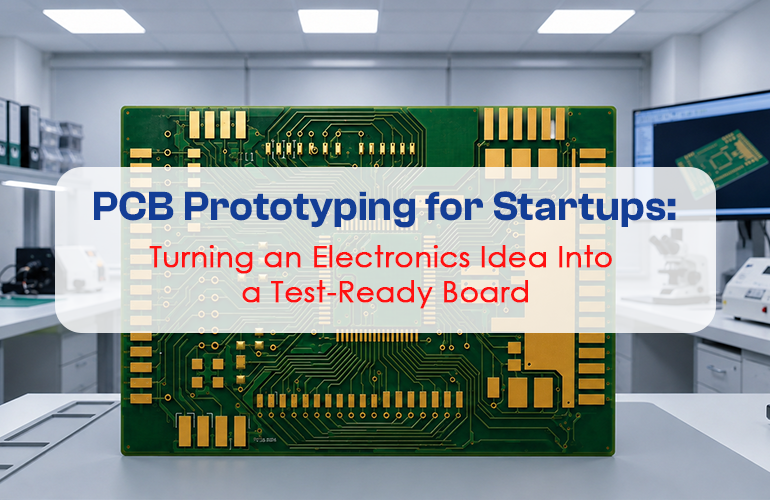
For startups, every electronics idea needs to move from concept to reality quickly. PCB prototyping helps turn a design into a physical board that can be tested, improved, and prepared for the market.
A PCB prototype allows startup teams to check whether their circuit works as expected. It also helps identify design flaws before investing in larger production.
Why Startups Need PCB Prototyping
Startups often work with limited time, budget, and resources. A working PCB prototype helps them make better decisions before scaling the product.
Instead of depending only on simulations or drawings, startups can test the actual board and understand how it performs in real conditions.
Turns Ideas Into Physical Products
PCB prototyping converts an electronics idea into a test-ready board. This makes the product easier to evaluate, demonstrate, and improve.
For hardware startups, a physical prototype is also useful for investor presentations, client demos, pilot testing, and early market feedback.
Helps Identify Design Errors Early
Early-stage designs often contain mistakes. These may include layout errors, spacing issues, power problems, heating concerns, or component placement challenges.
PCB prototyping helps find these errors before full production. Correcting mistakes at the prototype stage is faster and more affordable than correcting them after mass production.
Supports Faster Iterations
Product development usually requires multiple versions. After testing one prototype, engineers may need to change the design and manufacture the next version.
Fast prototype PCB manufacturing helps startups move through these iterations quickly. This speeds up the overall development cycle.
Improves Product Confidence
A tested PCB prototype gives startups more confidence in their product. It helps confirm functionality, performance, fitment, and assembly readiness.
This confidence is important before moving into small batch or production-level manufacturing.
Helps Plan the Next Stage
Once the prototype is approved, startups can move toward pilot production or small batch PCB manufacturing. This stage helps validate the product further before larger production begins.
A good PCB manufacturer can support this journey from prototype to production planning.
How True PCB Supports PCB Prototyping for Startups
True PCB supports startups by helping them convert electronics ideas into test-ready PCB prototypes. For early-stage product development, fast and reliable prototype manufacturing allows teams to test designs, improve functionality, and prepare for pilot production.
With prototype PCB manufacturing, small batch support, material options, and testing capabilities, True PCB helps startups reduce uncertainty and move forward with stronger product confidence.
Conclusion
PCB prototyping for startups is a critical step in electronics product development. It helps turn ideas into test-ready boards, identify errors early, support faster iterations, and improve product confidence.
For startups building reliable electronic products, PCB prototyping is not just a manufacturing step. It is a foundation for innovation, validation, and market readiness.