
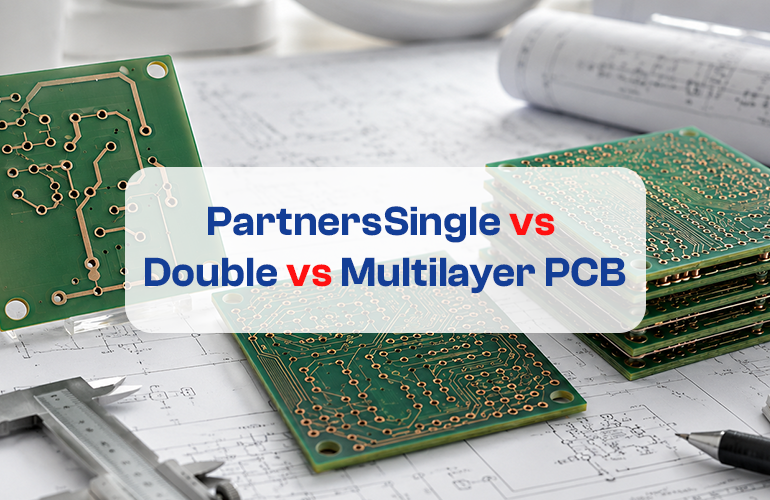
In the electronics manufacturing industry, engineers use different types of printed circuit boards (PCBs) based on design complexity and application requirements. Among the most common types are single layer, double layer, and multilayer PCBs. Each type serves a specific purpose, and designers select them based on circuit complexity, cost, and performance needs. Therefore, understanding the differences between these PCB types becomes essential.
Single Layer PCB
A single layer PCB contains only one conductive layer. Designers place all components and circuits on one side of the board, while the other side acts as a substrate.
Manufacturers widely use single layer PCBs in simple electronic devices that require minimal circuitry. Their straightforward design makes them easy to manufacture and cost-effective. However, limited routing space restricts their ability to support complex circuit designs efficiently.
Double Layer PCB
A double layer PCB includes two conductive layers, one on each side of the board. Designers can mount components on both sides, and they connect layers using vias.
With double layer PCBs, designers can build more complex circuits compared to single layer boards. This structure provides better flexibility and improved routing options. Because of these advantages, industries commonly use these PCBs in industrial equipment and moderately complex electronic devices.
Multilayer PCB
A multilayer PCB consists of multiple conductive layers stacked together and separated by insulating materials. Advanced manufacturing techniques connect these layers.
Engineers use multilayer PCBs in high-performance and complex electronic applications that demand compact designs and high-speed functionality. These boards offer greater circuit density and improved signal integrity. However, they require more complex manufacturing processes and involve higher costs compared to single and double layer PCBs.
Key Differences Between PCB Types
The main differences between single, double, and multilayer PCBs lie in their structure, complexity, and performance.
Single layer PCBs use only one conductive layer, making them suitable for basic applications.
Double layer PCBs use two layers, which allows more complex designs.
Multilayer PCBs include multiple layers, enabling advanced functionality and compact designs.
As the number of layers increases, cost also rises. At the same time, performance and capability improve significantly.
Choosing the Right PCB Type
Designers choose the PCB type based on project requirements. For simple devices, they prefer single layer PCBs because of their low cost and ease of production. For moderately complex designs, they select double layer PCBs to achieve better flexibility.
For advanced electronics, engineers choose multilayer PCBs because they deliver high performance and support complex circuit integration. Therefore, selecting the right PCB requires balancing both technical requirements and budget constraints.
Conclusion
Different PCB types address different levels of complexity and performance needs. Single, double, and multilayer PCBs each offer unique advantages and limitations.
When designers clearly understand these differences, they can make better decisions during design and manufacturing. As a result, they can improve product performance and increase development efficiency.