
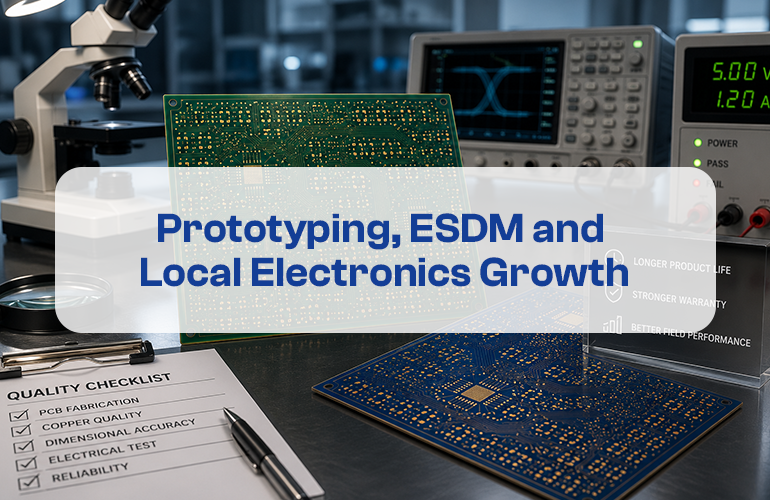
PCB quality directly affects product life, warranty issues, and field performance. A printed circuit board is the base of an electronic product. If the PCB is weak, unreliable, or poorly manufactured, the final product may fail even if the design and components are good.
For businesses, PCB failure can lead to customer complaints, product returns, service costs, and brand trust issues. Therefore, PCB quality should be treated as a long-term investment.
PCB Quality and Product Life
A high-quality PCB supports stable electrical performance over time. Good material selection, copper quality, solder mask application, plating, surface finish, and testing all contribute to product life.
Poor PCB quality may cause corrosion, open circuits, short circuits, overheating, or signal failure.
Impact on Warranty Claims
When a product fails in the field, warranty claims can increase. Many failures may be connected to weak PCB manufacturing, poor solderability, contamination, or unreliable connections.
By improving PCB quality at the manufacturing stage, companies can reduce the chances of future warranty problems.
Field Performance Matters
Field performance means how the product works in real conditions after installation or use. A PCB may pass basic testing but still fail later if quality control is weak.
Products used in industrial, automotive, telecom, medical, and power applications need strong PCB reliability because they often operate in demanding conditions.
Importance of Testing
PCB testing helps detect problems before the board moves into assembly. Electrical testing, AOI inspection, contamination testing, impedance testing, and surface checks help identify possible defects.
Testing helps improve confidence that the PCB is ready for real-world use.
Material and Surface Finish
Material choice and surface finish affect long-term performance. The right material supports heat, signal stability, and mechanical strength. The right surface finish protects copper and improves solderability.
These choices must be aligned with the product’s application.
Manufacturing Consistency
Consistent manufacturing is important when the same PCB must be produced repeatedly. If quality varies between batches, product performance may also vary.
Controlled processes help maintain repeatability and reduce failure risk.
How True PCB Supports PCB Quality and Reliability
True PCB focuses on quality-driven PCB manufacturing through controlled processes, defined technical specifications, advanced fabrication capabilities, and strict quality systems. Its services support prototype development, small batch production, and technically demanding PCB requirements.
True PCB also provides testing and inspection services including flying probe, AOI, contamination, impedance, and other inspection tests. These processes help customers improve confidence before boards move into assembly or field use.
Conclusion
PCB quality affects product life, warranty claims, and field performance. A reliable PCB helps reduce failures, improve customer confidence, and protect brand reputation.
By focusing on quality from the manufacturing stage itself, companies can build electronic products that perform better over time.