
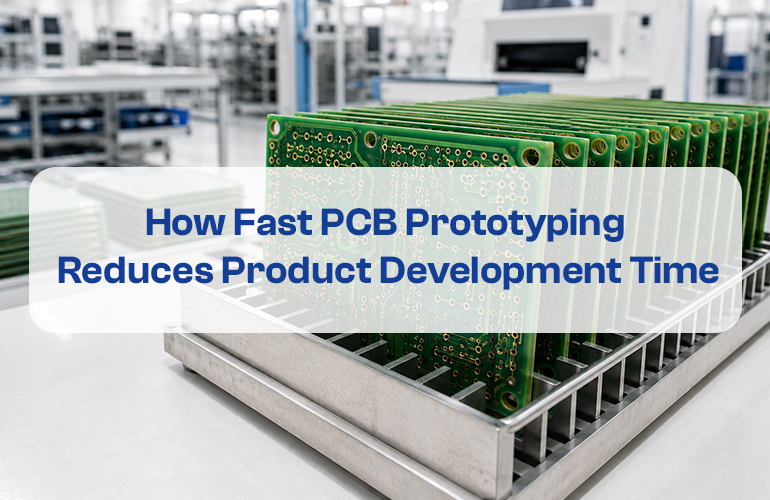
In today’s competitive electronics industry, companies need faster product development to stay ahead. Startups and manufacturers must launch products quickly while maintaining quality and performance. One of the most effective ways to achieve this is through fast PCB prototyping. Therefore, understanding this approach helps improve development speed and efficiency.
Early Error Detection with Fast PCB Prototyping
During the initial stages of product development, design errors often appear. If teams fail to identify these issues early, they can cause major delays later.
With fast PCB prototyping, engineers quickly convert designs into functional boards for testing. As a result, teams detect problems early and fix them without wasting time. This significantly reduces delays in the overall development process.
Faster Iterations in PCB Prototyping
Product development usually involves multiple design iterations. Each version improves performance and functionality. However, slow prototyping can delay this process.
This approach allows teams to test, modify, and retest designs quickly. Therefore, development cycles become shorter, and improvements happen faster. In addition, rapid PCB prototyping helps teams adapt changes efficiently.
Improved Testing Through Rapid Prototyping
Testing and validation play a critical role before moving to production. Without proper testing, products may fail later, causing serious delays.
This method provides quick access to working prototypes. Because of this, teams complete validation faster and confirm design reliability on time. As a result, development moves forward without unnecessary interruptions.
Smooth Transition from Prototype to Production
The shift from prototype to production must be smooth. If prototyping takes too long, it delays the entire production timeline.
With fast PCB prototyping, teams finalize designs earlier. Therefore, production planning can start sooner, reducing the overall timeline and improving workflow efficiency.
Reduced Rework and Development Delays
Rework increases both time and cost, especially when teams discover issues at a late stage.
Early validation helps identify and resolve problems in the initial phase. As a result, teams reduce rework and avoid delays during production. This leads to more efficient project execution.
Faster Time-to-Market Advantage
In competitive markets, speed plays a crucial role. Delayed product launches can result in lost opportunities.
Fast PCB prototyping enables quicker testing and development. Therefore, businesses can launch products faster and respond to market demands more effectively.
Conclusion
Fast PCB prototyping plays a key role in accelerating product development. It helps teams detect errors early, complete iterations quickly, and perform efficient testing.
By using this approach, companies can reduce delays, improve efficiency, and deliver products to the market faster.