
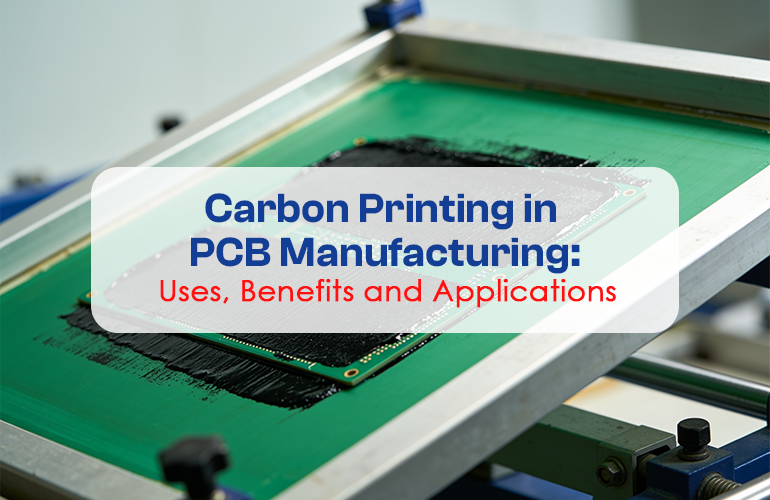
Carbon printing is a specialized process in PCB manufacturing. It applies conductive carbon ink to selected areas of a board. This is useful for contact pads, keypad areas, and switch contacts where durability and stable electrical performance are critical.
Carbon-printed areas improve wear resistance and ensure reliable contact over repeated use. Proper planning of carbon printing can make PCBs more durable and user-friendly.
What Is Carbon Printing in PCB?
Carbon printing deposits a layer of conductive carbon ink on specific PCB areas. These areas are designed for electrical contact or frequent mechanical interaction.
Unlike copper pads, carbon-printed regions can withstand pressing, touching, or sliding repeatedly. This makes them ideal for interfaces and controls in electronic products.
Why Carbon Printing Is Used
Carbon printing provides a durable contact surface that maintains stable electrical connections. It reduces wear on high-use areas and ensures consistent performance over time.
This is especially useful when the PCB is part of a user interface or control system, like buttons, switches, or keypads.
Keypad PCB Applications
Carbon printing is commonly used in keypad PCBs. Carbon pads act as the contact points for buttons or membrane switches. When pressed, the carbon completes the circuit.
Applications include:
- Remote controls
- Control panels
- Appliances
- Industrial keypads
These carbon pads improve durability and maintain reliable contact even after repeated use.
Contact Pads and Switch Areas
Carbon printing is also used on other contact pads and switch areas where repeated use is expected. This helps ensure long-term performance and reliability.
Benefits of Carbon Printing
- Provides durable contact surfaces
- Supports stable electrical performance
- Reduces wear on high-use areas
- Enables compact and efficient designs
Carbon printing also allows engineers to embed contact functionality directly onto the PCB, saving space and simplifying assembly.
Manufacturing Considerations
Engineers should define carbon-printed areas clearly in PCB design files. Key factors include:
- Carbon thickness
- Contact area
- Curing requirements
- Intended mechanical use
Proper planning ensures accurate application and long-lasting performance.
How TruePCB Supports Carbon Printing
TruePCB provides carbon printing services for contact pads, keypads, and other high-use areas. Their support includes:
- Accurate carbon ink application for prototypes and small batches
- Manufacturing for compact, fine, and high-use designs
- Testing and inspection to ensure durability and performance
Applications include control panels, keypad circuits, industrial electronics, and device interfaces. TruePCB ensures boards meet performance and reliability requirements.
Conclusion
Carbon printing improves durability and electrical stability for PCB contact areas. It is essential for keypads, contact pads, and switches in high-use products.
Working with a capable manufacturer like TruePCB ensures carbon printing is accurate, reliable, and fully aligned with product requirements, improving PCB performance and longevity.