
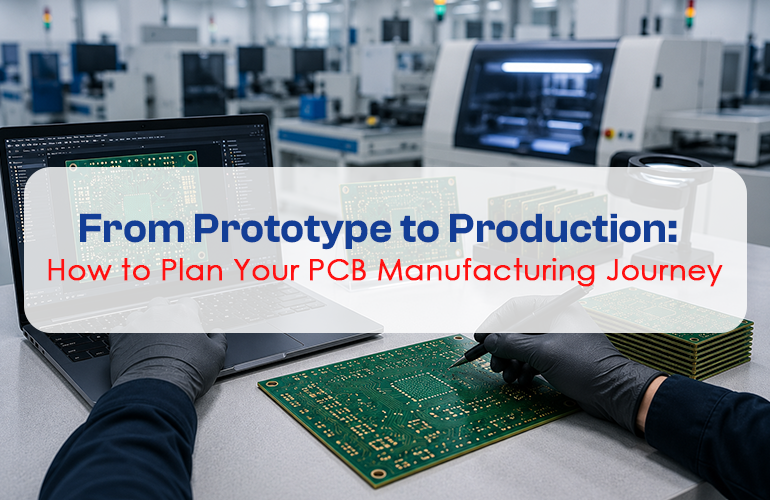
The PCB manufacturing journey involves multiple stages before a product reaches full production. A successful electronic product usually moves through design review, prototype PCB manufacturing, testing, improvements, small batch production, and final production planning.
A clear manufacturing plan helps companies reduce mistakes, control costs, and improve product reliability. Therefore, understanding each stage helps engineers move from an initial idea to a production-ready PCB with fewer challenges.
Start With Design Readiness
Before starting production, engineers should prepare complete and accurate design files. A manufacturer needs clear information to build the PCB correctly.
Important details include:
- Gerber files
- Drill files
- Layer structure
- Board dimensions
- Material requirements
- Copper thickness
- Surface finish
Additionally, reviewing these details early helps prevent production delays and improves manufacturing accuracy.
Build the First PCB Prototype
The first prototype converts a digital design into a physical board. It allows engineers to test the actual performance of the PCB.
During prototype testing, teams can check:
- Circuit functionality
- Component placement
- Signal behavior
- Heat performance
- Assembly compatibility
Moreover, prototype PCB manufacturing helps identify problems before companies invest in larger quantities.
Test and Improve the Design
Testing is an important part of the PCB development process. A prototype may reveal issues that are not visible during the design stage.
For example, engineers may discover:
- Layout problems
- Electrical issues
- Component placement errors
- Thermal challenges
After reviewing the results, teams can improve the design and create a better version of the PCB.
Each iteration provides valuable information and moves the product closer to production readiness.
Move to Small Batch Production
After successful prototype testing, companies can move toward small batch PCB manufacturing.
This stage helps businesses validate the design with limited quantities before starting mass production.
Small batch production is useful for:
- Pilot runs
- Customer testing
- Product trials
- Certification processes
- Assembly validation
As a result, companies can reduce production risks and make confident decisions before scaling.
Prepare for Production Scaling
Before moving into full production, teams should finalize important manufacturing details.
These include:
- Production documentation
- Material selection
- Testing requirements
- Quality standards
- Packaging requirements
Furthermore, proper planning helps manufacturers maintain consistency when producing larger quantities.
Maintain Testing Throughout the Process
Testing should continue at every stage of the PCB manufacturing journey.
Prototype testing helps identify early issues, while small batch inspection confirms product readiness. Production testing ensures consistent quality across larger quantities.
Therefore, continuous testing helps reduce field failures and improves customer confidence.
Work With One Manufacturing Partner
Working with a PCB manufacturer that supports prototype, small batch, and production requirements creates a smoother development process.
A single manufacturing partner helps maintain:
- Better communication
- Consistent quality
- Faster design improvements
- Easier production planning
Additionally, it reduces confusion when moving between different manufacturing stages.
How True PCB Supports the Prototype-to-Production Journey
True PCB supports companies throughout the complete PCB development process, from prototype validation to production planning.
The company provides:
- Prototype PCB manufacturing
- Small batch production
- Single-sided and double-sided PCBs
- Multilayer PCB fabrication
- Material selection support
- Testing and inspection services
True PCB uses modern machinery, controlled processes, and quality systems to help startups, OEMs, R&D teams, and industrial businesses develop reliable electronic products.
By supporting every stage of development, True PCB helps customers move from initial design validation to production-ready PCB manufacturing with better confidence.
Conclusion
Planning the PCB manufacturing journey helps companies reduce risks and improve product quality. Each stage, from design preparation and prototype testing to small batch validation and production scaling, plays an important role.
With proper planning and the right PCB manufacturing partner, businesses can develop reliable electronic products faster and move confidently toward successful production.