
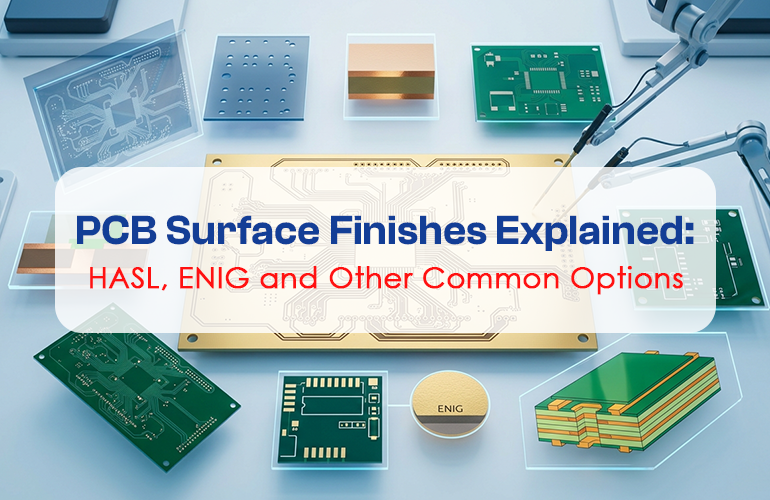
A proper PCB surface finish is essential for protecting exposed copper and ensuring reliable soldering during assembly. Without it, copper can oxidize, reducing solderability and long-term reliability. Selecting the right surface finish is critical for both prototype and production PCBs.
What Is PCB Surface Finish?
A PCB surface finish is a protective coating applied to exposed copper areas. It preserves solderability, protects against oxidation, and improves assembly quality. Choice depends on component type, application, shelf life, and performance requirements.
HASL Surface Finish
HASL (Hot Air Solder Leveling) is a common, cost-effective finish. The board is coated with solder and leveled with hot air.
- Use Cases: Standard PCBs where general solderability and cost efficiency matter.
ENIG Surface Finish
ENIG (Electroless Nickel Immersion Gold) offers a flat surface and excellent oxidation resistance.
- Use Cases: Fine-pitch components, high-reliability applications, and boards requiring precise assembly.
Other Surface Finish Options
Other finishes include:
- Immersion Silver
- Immersion Tin
- OSP (Organic Solderability Preservatives)
- Specialized coatings
Each has pros and cons; selection depends on PCB application and assembly requirements.
Why Surface Finish Selection Matters
Surface finish affects:
- Solder joint quality
- Component placement
- Storage life
- Inspection outcomes
Poor finishes can lead to soldering defects, oxidation, and assembly failures. Fine-pitch and compact PCBs are especially sensitive.
Discuss Finish Requirements Early
Engineers should finalize surface finish during design and planning. Manufacturers can advise on suitable finishes based on material, components, and production needs, preventing delays and ensuring better assembly quality.
How TruePCB Supports PCB Surface Finish Requirements
TruePCB helps engineers and startups select the correct surface finish for prototypes and small batch PCBs. They provide support based on:
- Material type
- Component requirements
- Assembly process
- Long-term performance and reliability
With TruePCB, customers can ensure solderability, copper protection, and overall board performance.
Conclusion
PCB surface finish is more than a coating; it protects copper, ensures solderability, and supports reliable assembly. Choosing the right finish, like HASL, ENIG, or others, enhances PCB performance and long-term reliability. True PCB provides guidance and support to make the best surface finish choices for your projects.