
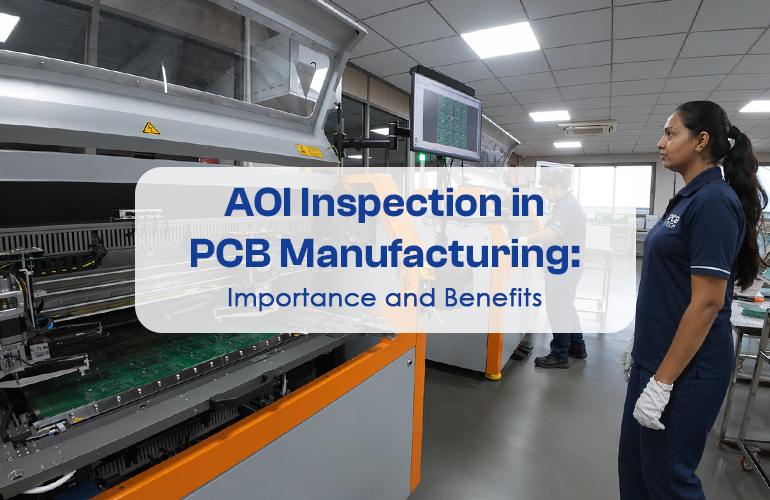
In PCB manufacturing, quality control plays a critical role in ensuring reliable and high-performance electronic products. Manufacturers use various inspection methods to detect defects during production, and Automated Optical Inspection is one of the most effective techniques. Therefore, understanding AOI inspection helps maintain consistent quality standards.
What is AOI Inspection in PCB Manufacturing
AOI inspection is a visual inspection process where advanced cameras and software examine PCBs for defects. During this process, the system captures images of the board and compares them with predefined design data.
This method helps identify issues such as missing components, incorrect placements, soldering defects, and track problems. As a result, this inspection process ensures accurate detection of manufacturing errors.
How AOI Inspection Works
In this process, high-resolution cameras scan the PCB surface in detail. The system then analyzes captured images using intelligent software algorithms.
If any variation appears, the system immediately flags it for correction. Because of this, manufacturers can take quick action and prevent defects from moving to later stages.
Common Defects Detected by AOI
This inspection method helps detect a wide range of production defects, including:
- Missing or misplaced components
- Soldering issues such as excess or insufficient solder
- Short circuits or open circuits
- Incorrect component orientation
By identifying these problems early, manufacturers can avoid major production errors and improve overall quality.
Benefits of Automated Optical Inspection
Automated Optical Inspection provides several advantages in PCB manufacturing. It improves accuracy, reduces human error, and increases inspection speed.
In addition, early defect detection minimizes rework and prevents production delays. As a result, manufacturers achieve better efficiency and cost control.
Role in PCB Quality Assurance
Quality assurance depends on reliable inspection processes. This method ensures that every PCB meets design specifications before moving forward.
Because of this, production consistency improves, and defect rates decrease. This makes it a standard practice in modern PCB manufacturing.
Conclusion
This inspection technique plays an important role in maintaining quality and reliability in PCB manufacturing. By using advanced imaging and automated analysis, manufacturers can detect defects quickly and accurately.
Understanding AOI inspection helps improve efficiency, reduce costs, and ensure consistent product performance.